2026-09-11
Don't Miss Out: Sagging Breasts & Breast Lift Surgery | Everything You Need to Know
Explore everything about breast lift surgery (mastopexy): causes of sagging, surgical techniques, candidate requirements, preoperative prep, and complete recovery timelines for safe results.
Recently, consultations for breast lift surgery (mastopexy) have been steadily increasing. Many more people than you might think struggle with sagging breasts caused by childbirth, breastfeeding, rapid weight fluctuations, or natural aging. Because this is not merely a cosmetic concern but an issue that impacts self-confidence and daily quality of life, making a careful decision based on accurate medical information is essential.
In this article, we will thoroughly explain what a breast lift is, who is an ideal candidate, the surgical techniques used, and what to expect during the recovery process.
Why Do Breasts Sag?
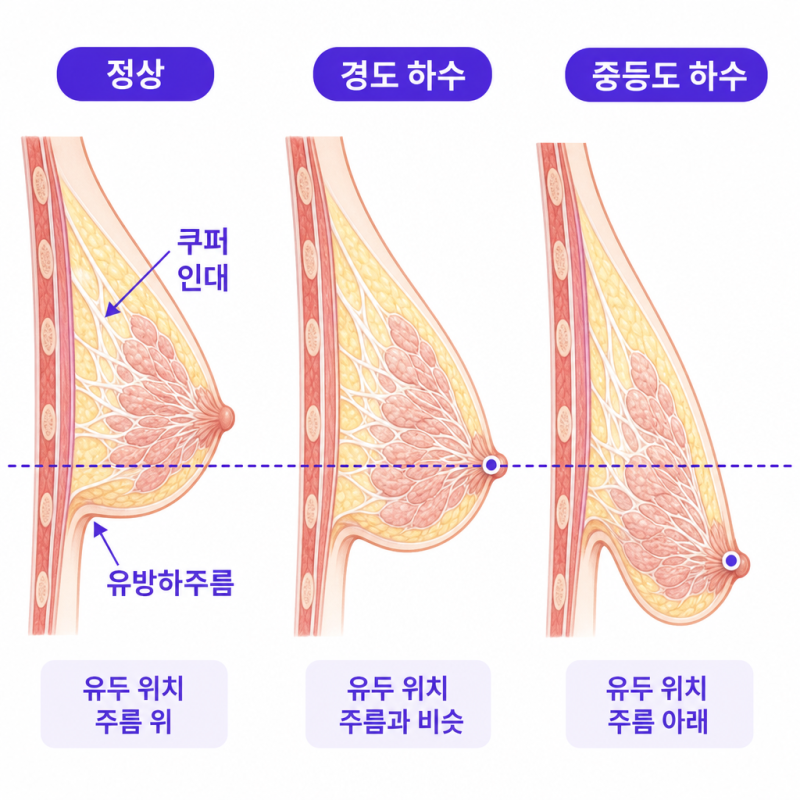
The medical term for sagging breasts is breast ptosis. Simply put, it describes a condition where breast tissue and skin lose elasticity, causing the breasts to droop downward.
There are four main causes:
Pregnancy and Breastfeeding: Breasts enlarge during lactation, and when the volume rapidly decreases post-weaning, excess loose skin remains.
Rapid Weight Loss: When shedding more than 10 kilograms in a short period, the skin's elasticity often cannot keep pace with the sudden volume loss.
Aging: Starting in the mid-30s, natural collagen (the structural protein that maintains skin elasticity) decreases, leading to natural drooping.
Gravity and Weakening Support Structures: The stretching of Cooper's ligaments (the fibrous connective tissues supporting breast tissue from above) causes the breasts to descend.
The degree of ptosis is determined based on the position of the nipple. If the nipple sits at the level of the inframammary fold (the crease beneath the breast) or lower, surgical correction is generally indicated.
What Is a Breast Lift?
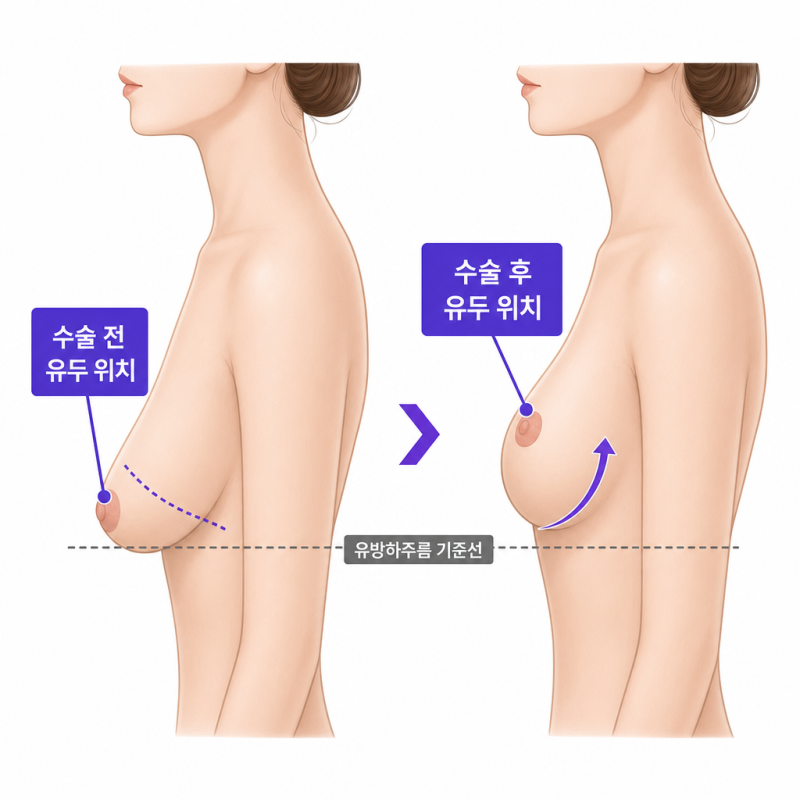
A breast lift (mastopexy) is a surgical procedure that repositions sagging breast tissue and skin while excising excess skin to restore the breast's position and shape. It is different from breast augmentation, which uses implants. A lift does not aim to enlarge breast volume; rather, it focuses on elevating existing tissue and sculpting a youthful contour.
Of course, both procedures can be performed simultaneously. Individuals with significant sagging combined with an overall lack of volume often opt for a breast lift combined with implants. Because this involves a more complex surgical plan, it should only be decided after an in-depth consultation with a specialist.
A breast lift achieves two core objectives: first, repositioning the nipple and areola (the pigmented skin around the nipple) higher on the chest wall; second, removing loose, stretched skin so the breast maintains a firm, rounded shape.
After surgery, the breasts sit higher, the nipples face forward, and clothing fits with a far more natural, rejuvenated silhouette.
Surgical Techniques: Tailored to the Severity of Sagging
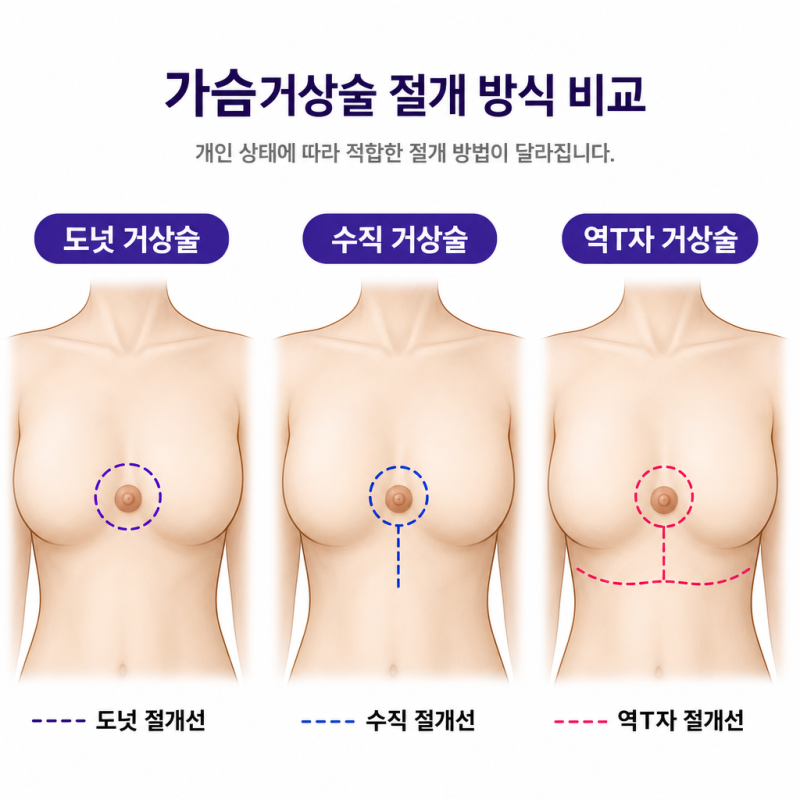
In breast lift surgery, the incision pattern varies depending on the degree of ptosis and the volume of excess skin to be removed. Because the incision lines dictate where scars will lie, receiving a clear explanation before surgery is crucial.
Periareolar Lift (Donut Lift)
Indicated for mild sagging. The incision is made exclusively along the circumference of the areola, leaving a scar neatly concealed along the areolar border. However, the extent of correction possible is limited.
Vertical Lift (Lollipop Lift)
Indicated for moderate sagging. An incision around the areola is paired with a vertical incision running straight down from the areola to the inframammary fold, creating a lollipop or letter "I" shape. It provides significant lift with relatively limited scarring.
Inverted-T Lift (Anchor Lift)
Indicated for severe sagging. This method involves an areolar incision, a vertical line, and a horizontal incision along the inframammary crease, resembling an anchor. It removes the greatest amount of excess skin for maximum correction, though it results in the most extensive scarring among the three approaches.
The most suitable technique is determined through a comprehensive evaluation of nipple position, skin redundancy, and tissue elasticity. Rather than choosing an incision pattern purely by preference, it must be evaluated by a board-certified specialist according to your specific anatomy.
Key Considerations Before Surgery
Before committing to surgery, there are several vital factors you must evaluate:
Comprehensive Health Assessment
Blood tests, breast ultrasound, or mammography (breast X-ray) are conducted first to ensure there are no abnormalities within the breast tissue. A thorough preoperative health screening is an essential foundation for safe surgery.
Smoking Status
Smoking severely impedes wound healing. Because it compromises microvascular blood circulation, it significantly elevates the risk of tissue necrosis (tissue death) at the surgical site. Complete smoking cessation is strictly required for at least four weeks before surgery.
Future Pregnancy Plans
If you plan to become pregnant or breastfeed in the future, timing the procedure carefully is vital. Because post-pregnancy breastfeeding can cause the breasts to stretch and sag again, undergoing a breast lift after completing family planning is highly recommended.
Setting Realistic Expectations
A breast lift corrects sagging; it cannot guarantee absolute symmetry or permanently return breasts to their early-twenties state. Scars fade significantly over time but do not vanish entirely. Maintaining realistic expectations is key to achieving high surgical satisfaction.
During your consultation, be prepared to answer precisely when asked, "What results do you hope to achieve?" Clear goals—such as "I want to elevate the nipple position" or "I want a firmer, rounded upper pole"—enable much more effective communication than a vague desire to "look better."
Recovery Timeline: What to Expect
A breast lift is performed under general anesthesia or conscious sedation (twilight anesthesia) and generally takes between 2 to 3 hours.
First Week Post-Op
Swelling (edema) and bruising are entirely normal during this period. You will wear a surgical support bra designed to stabilize the tissue. Avoid strenuous activity and refrain from lifting your arms overhead. Sutures are typically removed around the one-week mark.
2 to 4 Weeks
Swelling subsides noticeably. Light daily activities are permitted, though strenuous exercise and heavy lifting remain strictly prohibited. You can begin applying silicone scar sheets or scar gels during this window.
1 to 3 Months
The majority of swelling resolves, and the breast shape settles into its new position. You may gradually resume light cardiovascular workouts. While incisions may appear red and slightly raised initially, they will progressively soften and fade.
6 Months and Beyond
This marks the stage where final aesthetic results become apparent. Scars fade considerably, and the contours stabilize. Complete scar maturation typically takes anywhere from 1 to 2 years.
Postoperative sensory changes (numbness or heightened sensitivity) are usually temporary and resolve within several months. However, because individual healing varies, keep your surgeon updated during follow-up visits.
Conclusion: Informed Decisions Lead to the Best Results
Breast lift surgery is an effective solution for alleviating the physical discomfort and emotional distress caused by sagging breasts. However, as with any surgical procedure, gathering comprehensive information and consulting directly with an experienced specialist must come first.
Consider your degree of ptosis, medical history, future pregnancy plans, and scar tolerance. Rather than making a hasty decision after a single consultation, seeking secondary opinions from two or three board-certified surgeons is a wise approach.
The optimal surgical procedure is the one tailored to your personal anatomy. What works wonders for someone else may not be the right choice for you. Always proceed only after an accurate, personalized medical evaluation.
If you are contemplating surgery, schedule a consultation with a board-certified plastic surgeon. Precise evaluation, thorough explanations, and grounded expectations represent the most reliable pathway to a safe and satisfying outcome.
Frequently Asked Questions
How does a breast lift differ from breast augmentation?
A breast lift repositions sagging tissue and trims redundant skin without increasing breast volume. In contrast, breast augmentation focuses on increasing size using implants. For individuals experiencing both sagging and significant volume loss, both procedures can be combined.
How is the incision method chosen based on the degree of sagging?
A board-certified surgeon selects the incision based on the severity of ptosis and the volume of skin requiring removal. Mild drooping is addressed with a periareolar (donut) lift, moderate sagging with a vertical (lollipop) lift, and severe ptosis with an inverted-T (anchor) lift.
Why is smoking cessation mandatory before surgery?
You must stop smoking at least four weeks prior to surgery to minimize the risk of tissue necrosis caused by impaired vascular circulation. Nicotine and toxic compounds delay wound healing and heighten complication risks, making strict cessation vital for safety.
Can I undergo a breast lift if I plan to have children or breastfeed?
It is strongly advised to undergo the procedure after you have finished having children and breastfeeding. Subsequent pregnancy and lactation cause rapid fluctuations in breast volume, which frequently leads to recurrent sagging.
How long does it take to return to daily routines and for scars to heal?
Light daily activities can usually resume within 2 to 4 weeks, while full scar maturation takes roughly 1 to 2 years. Sutures are removed around one week post-op, and final breast contours emerge around the 6-month mark. Temporary sensory changes typically resolve within several months.